A Survey of Discomfort with Encountering Smart Speakers
PhD project
PhD student:
Supervisors:
Kami Vaniea (University of Waterloo), Maria Wolters (School of Informatics / OFFIS)
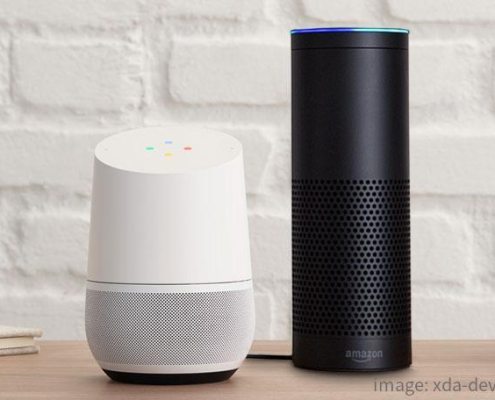
Smart speakers in the home like Amazon Echo or Google Home are rarely used by just a single person, which makes tensions and discomfort unavoidable. If we understand why and in which situations this discomfort might arise, we can develop solutions to support low-risk and comfortable smart speaker sharing for everyone involved. In this study, we examined how smart speaker feature, user role, and presence of others (context) affect perceived comfort with someone initiating an interaction with a smart speaker.
To this end, we conducted a survey with 107 smart speaker account owners, 107 cohabitants, and 95 visitors to smart speaker homes and analysed the results using mixed methods. Our results reveal that all three factors, feature, role, and context, affect perceived comfort. Purchase, communication, and calendar features were deemed to be least shareable. Comfort drops significantly if people outside the household are involved who are not family members or friends. In general, participants preferred interacting with the smart speaker when alone. Findings highlight key friction points due to mismatched social norms and expectations around sharing smart speakers. We suggest that rather than developing technical solutions, the relevant social norms require more in-depth study.
Collaborators: Tarini Saka
Funder: UKRI Centre for Doctoral Training in Natural Language Processing
Project dates: 2024-2025