
Data Dilemmas: Tomatoes, Humans, Machines and Capitalism
PhD project
PhD student:
Supervisors:
Larissa Pschetz (Edinburgh College of Art), Bettina Nissen (Edinburgh College of Art), Chris Speed (RMIT)
Outputs from this project
Publications:
Youngsil Lee, Chris Speed, and Larissa Pschetz. 2024. Pheno-data: knowledge from tomatoes’ becoming with different ecological worlds. In Extended Abstracts of the CHI Conference on Human Factors in Computing Systems (CHI EA ’24). Association for Computing Machinery, New York, NY, USA, Article 562, 1–9. https://doi.org/10.1145/3613905.3644050
Events:
https://dezwijger.nl/programma/design-ai-extravaganza
Video: https://www.dropbox.com/scl/fi/pxtzt2x7xeezht8kf26hc/DCODE-final.mov?rlkey=xpvwmjrr5i5cuq6oy8zf3ftto&e=1&st=5anl9qpf&dl=0
related paper: https://doi.org/10.1145/3613905.3644050.
I created a self-reflective artwork in collaboration with a bio-artist, a design engineer, and biologists specialising in tomato research. The piece contrasts two very different ways of seeing data: one (computational data) generated by artificial intelligence, and another (Pheno-data) that records the complex, living context of tomato plants through video.
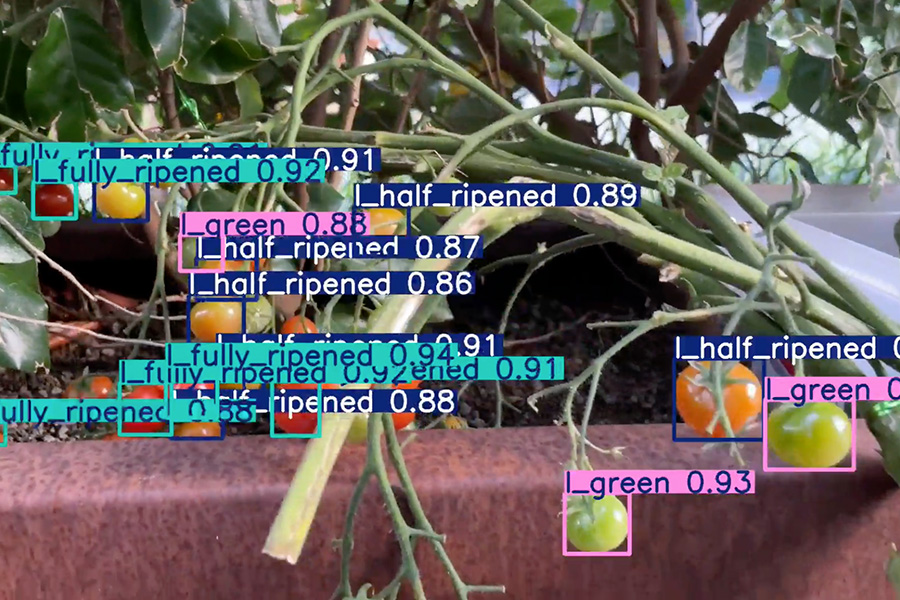
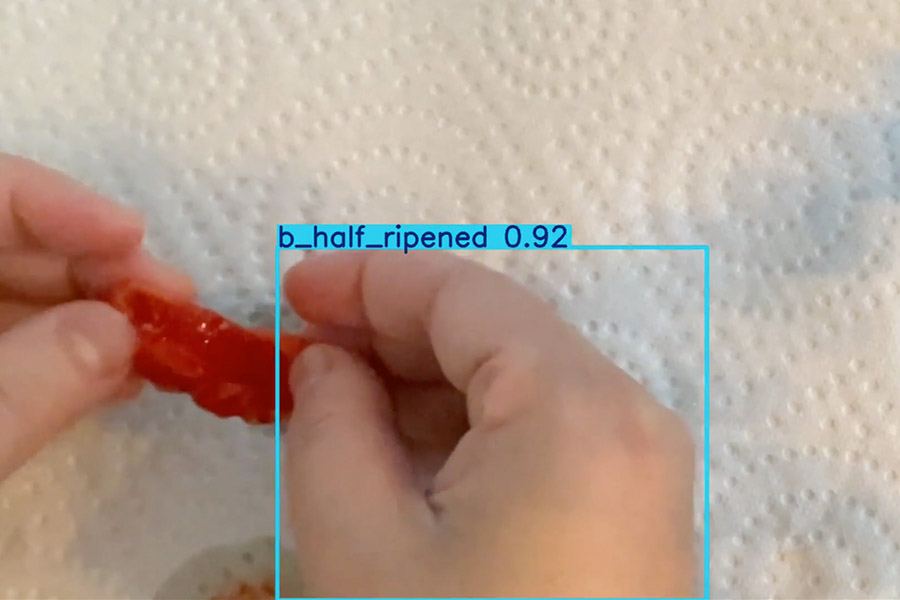
At home and in a nearby park, I recorded the full life cycle of tomato plants—focusing on their final stage, from fruiting to decay, a phase often excluded from the industrial cycle of commercial tomatoes. This footage was later reanalysed by a machine learning algorithm originally designed to assess tomato ripeness in industrial production. The results reveal how such technology, guided by narrow objectives, can easily overlook or misinterpret the regenerative power of death, where plants become part of others (fungi, insects, humans) and sustain their legacy through seeds.
Through this artwork, viewers are invited to reflect on how data-driven technologies may fail to perceive the intricate, relational qualities of life and death.
Collaborators: Margherita Soldati (Artist), Jerry de Vos (Design engineer, TU Delft), Xixi Min and Michele Butturini (Biologist, Wageningen University).
Funder: DCODE Horizon 2020 Marie Sklodowska-Curie Innovative Training Network (ITN)
Project dates: 2021 – 2025


