
A Glimpse Into Smart Speaker Etiquette
PhD project
PhD student:
Supervisors:
Kami Vaniea (University of Waterloo), Maria Wolters (School of Informatics / OFFIS)
A decade since the release of the first commercially available smart speaker, these devices have enticed users with promises of convenience and a technologically enhanced lifestyle. Smart speakers like the Amazon Echo or Google Nest offer benefits through services such as timers, Calls, Fact-Checking, Music Replay, Calendars, and purchases via voice commands to their users. Though often linked to a single account, smart speakers are rarely used by just one person. Other users may include people who live in the household, such as partners, family members, or flatmates, or temporary Visitors, such as guests, domestic helps, contract workers, or nannies. Especially in family households, these devices are considered “family devices” as opposed to personal devices like smartphones or laptops.
However, sharing a smart speaker may lead to tensions or even conflicts due to concerns or experienced risks and uncomfortable situations. To avoid such situations and to coordinate sharing devices in a peaceful manner, prior work suggests the existence of unspoken norms regarding the usage of smart speakers.
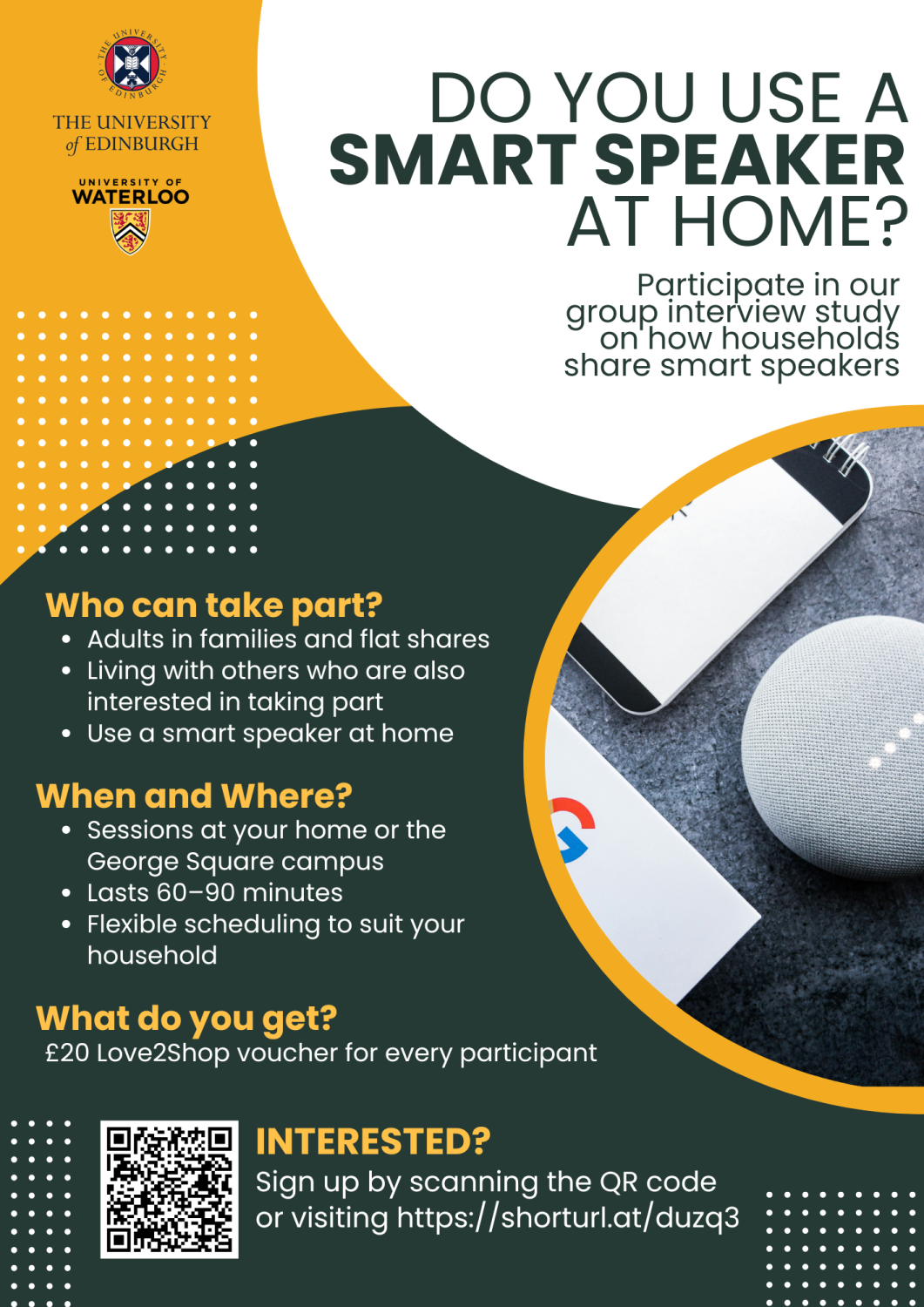
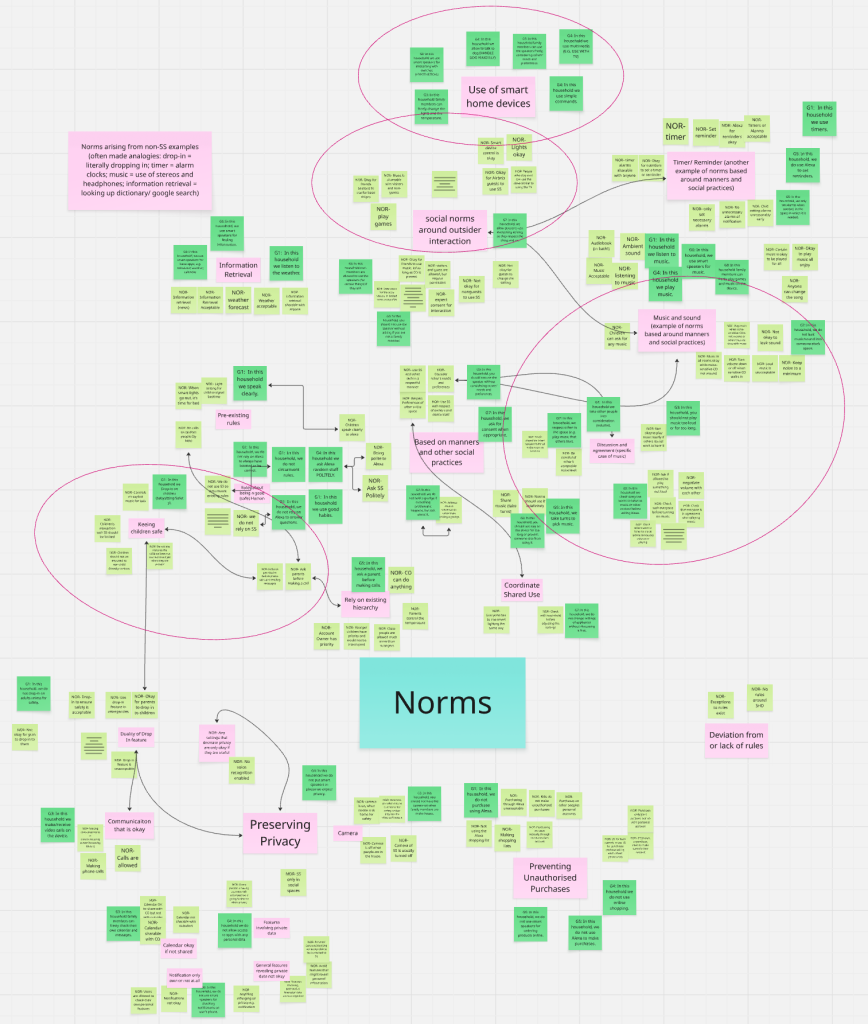
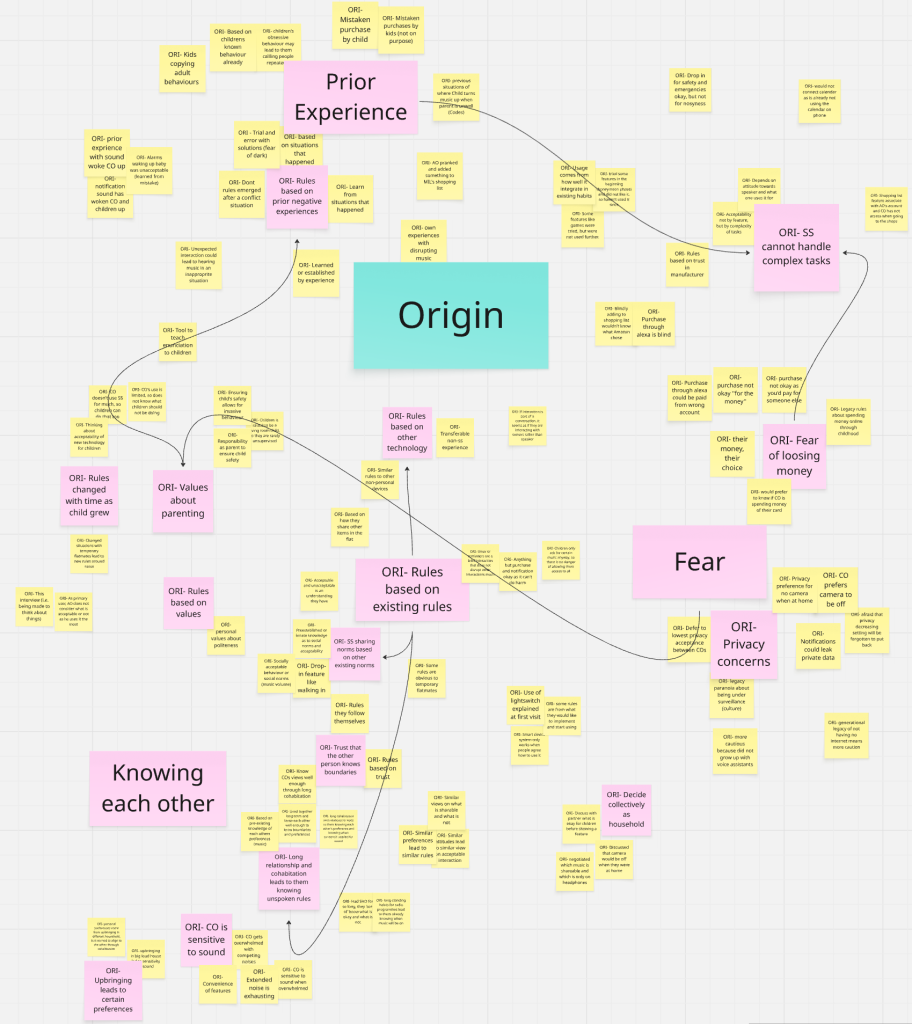
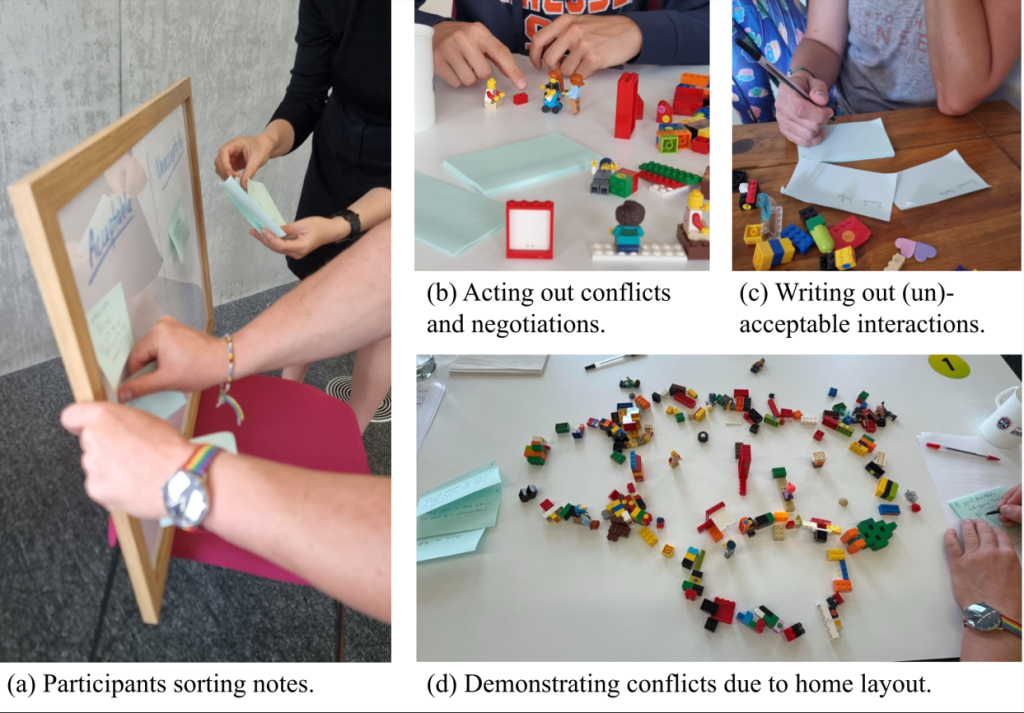
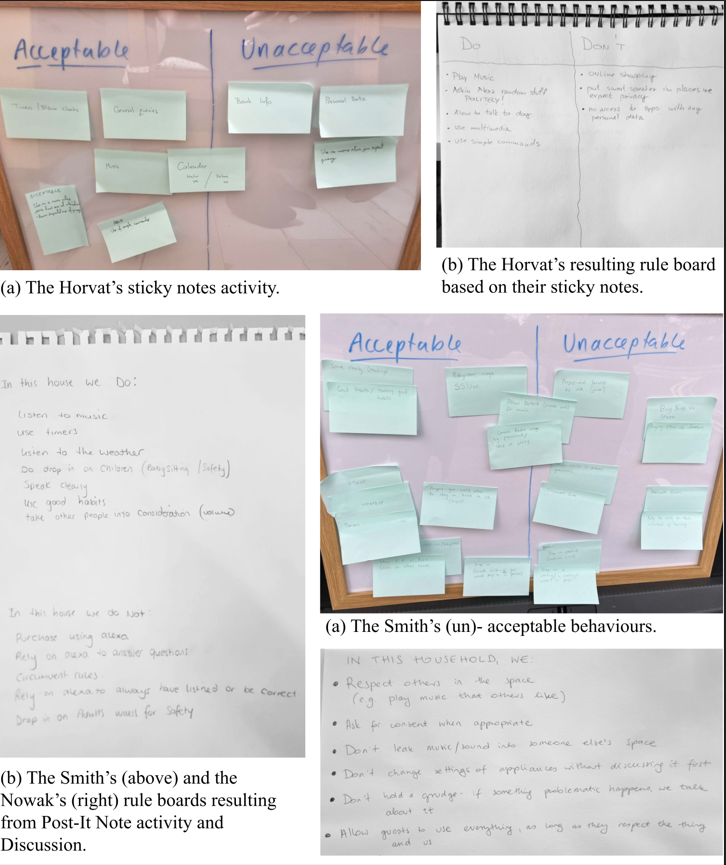
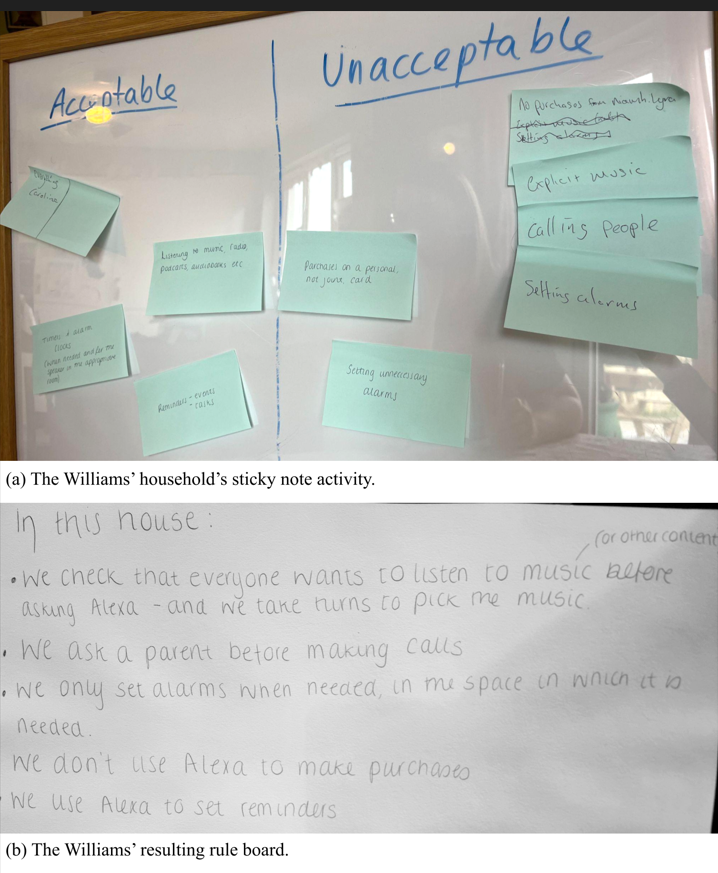
In this project, we aim to understand the kind of smart speaker sharing norms that exist in smart homes, their origin, and the involved negotiation processes, to determine how to support and ease these processes. By facilitating six group discussions with members of a household, we uncovered that the norms regarding which interactions were considered acceptable differed not only between households but also between members of the household. These unspoken rules covered limitations for existing features, expected behaviour around requesting permissions, interaction practices such as timing and volume, as well as more general norms coordinating sharing, such as turn-taking and respecting others. Our findings suggest that while norms clearly exist, they are individual to each home and its occupants and require support in communicating and establishing, rather than the application of a universal set of predefined rules.
Collaborators: Sarah Dunn (University of Edinburgh)
Funder: UKRI Centre for Doctoral Training in Natural Language Processing
Project dates: 2025


