Impacts of AI scraping on the digital commons and cultural heritage – an ekip project
Outputs from this project
McDonald, C., Currie, M., Dal Molin, L., Osborne, N., Talley, Anna, Senkić, M., & Volk, J. (2026). Re:Commons: Renewing the Digital Commons for Cultural Heritage. Zenodo. https://doi.org/10.5281/zenodo.23397333
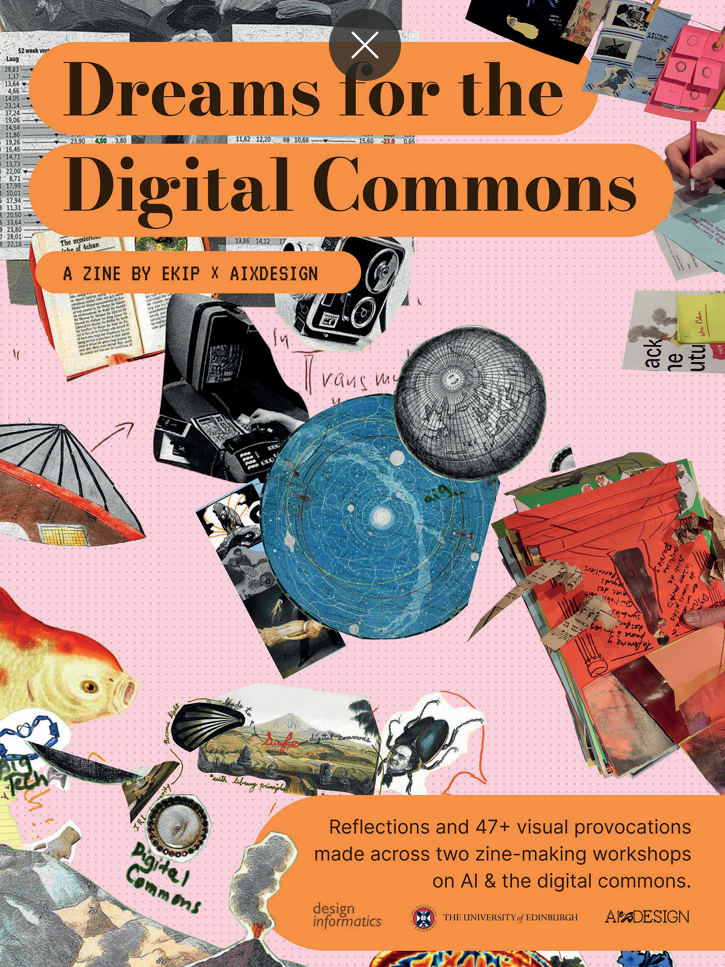
Currie, M., McDonald, C., Volk, J., Dal Molin, L., Senkić, M., Talley, Anna, Piet, N., & Marques, A. (2026). Dreams for the Digital Commons. Zenodo. https://doi.org/10.5281/zenodo.23390362
EU policy consultation response, “Copyright and related rights in relation to scraping by AI companies”:
https://ec.europa.eu/info/law/better-regulation/have-your-say/initiatives/18172-Report-on-the-review-of-the-2019-EU-rules-on-copyright-and-related-rights-in-the-digital-single-market/F33504269_en
EU policy consultation responses, “Impact of AI scraping bots on cultural heritage institutions”:
https://ec.europa.eu/info/law/better-regulation/have-your-say/initiatives/18592-Artificial-intelligence-strategy-for-the-cultural-and-creative-sectors/F33570110_en
McDonald, C., Jones, V., Currie, M., Stoy, L., Galante, L. (2026). Digital Commons in Cultural and Creative Industries: Governance, Sustainability and Democratic Access. ENCATC Congress 2026, Nice, France
Jones, V., Tally, A., McDonald, C., Stoy, L. (2026). Digital commons as policy and practice: participatory approaches supporting Europe’s cultural and creative industries. Infrastructures, Design and the Ethics of Autonomy. Digital Commons 2026. Athens, Greece.
The Digital Commons project is the 13th policy area through which ekip is feeding into EU policy and international debates about current challenges and opportunities facing Cultural and Creative Industries (CCI).
Through in-person and online workshops, policy labs and zine-making, the team at the University of Edinburgh together with ekip collaborators explored the digital commons, creative industries, attitudes to AI and the role played by galleries, libraries, archives and museums (GLAMs) in providing data and cultural content through online collections and repositories.
In parallel, the Design Informatics and Social and Political Sciences teams from University of Edinburgh investigated the realities of GLAMs and the digital commons facing automated, industrial scale scraping by bots serving the Generative AI (Gen AI) industry. Through 49 interviews and three workshops with 66 stakeholders from cultural heritage, GLAM, open culture and academic sectors, the team has built up a picture of infrastructural strain, services being taken offline, increased staff and technology costs and risks to publicly funded institutions and human wellbeing.
Heritage institutions are responding in different ways, including by blocking certain IP addresses, sometimes of entire countries; restricting automated access through bot-blocking firewalls; or, in more extreme cases, temporarily taking services offline. These mitigations and other knock-on effects are reshaping the open web by fundamentally changing how knowledge and culture can be accessed and by whom.
Outputs of this project include a digital and physical Zine, whitepaper with policy recommendations, responses to EU policy consultations, conference papers and journal articles (forthcoming).
The University of Edinburgh research reports and policy submissions advocate for the cultural heritage sector to have a meaningful say in whether, when and how bots access their online collections and for public support to offset the costs of commercial AI scraping.
Collaborators: Morgan Currie and Lara Dal Molin from SPS, University of Edinburgh
Lund University (Sweden), Technopolis Group (Belgium), Next Atlas (Italy), Netherlands Institute for Sound & Vision, AIxDesign.
Funder: This project has received funding from the European Union’s Horizon (2021-2027) Research and Innovation programme under grant agreement No. 101112111.
Project dates: 2026 (Overall ekip dates, 2022-2026)